Bisabolol is a renowned sesquiterpene alcohol, yet its skincare efficacy is strictly defined by its purity and specific isomeric form.
BioSyn-Bisabolol distinguishes itself as a ≥95% pure (-)-α-bisabolol produced through precision fermentation, offering 100% bio-based carbon content.
This specific natural configuration delivers potent anti-inflammatory results, shown in studies to reduce the release of IL-6 and TNF-α cytokines by 76% and 77% respectively.
Additionally, it functions as an effective penetration enhancer and antimicrobial agent with a farnesol level below 0.5%, ensuring high tolerability for sensitive skin.
Benefits
BioSyn-Bisabolol is a (-)-α-single configuration bisabolol with a purity ≥95%. Its biological activity is more closely resembling natural extractions and significantly superior to chemical synthesis racemates containing other enantiomers.
Laboratory data confirms that at a concentration of 10-20µg/mL, it can reduce the release of inflammatory mediators NO, TNF-α, and IL-6 by 80%, 77%, and 76% respectively by blocking the NF-κB and AP-1 signaling pathways.
In addition to inhibiting the production of PGE2 and IL-1α caused by UVB to reduce skin erythema, it also reduces melanin synthesis by lowering intracellular cAMP levels and acts as a penetration enhancer to improve the transdermal absorption rate of other active ingredients in the formula.
Anti-inflammatory and Soothing
Many users do not know that the effectiveness of bisabolol depends directly on its molecular structure. Common synthetic bisabolol on the market is usually a "racemate," in which some is less active (+)-α-bisabolol. BioSyn-Bisabolol is (-)-α-bisabolol, which is consistent with the structure of natural extracts and capable of binding to specific skin receptors and producing potent biological activity.
Specific anti-inflammatory performance:
In inflammatory model tests induced by LPS (lipopolysaccharide), (-)-α-bisabolol showed overwhelming inhibitory capacity. It mainly functions by regulating the gene expression of iNOS and COX-2:
Inflammatory Factors | Description of Action | Inhibition Rate (BioSyn-Bisabolol) |
NO (Nitric Oxide) | The main mediator causing vasodilation and tissue damage | 80% |
TNF-α | The main initiation signal of early inflammatory responses | 77% |
IL-6 | Cytokines leading to persistent inflammatory responses | 76% |
Note: Only the use of natural configuration (-)-α-bisabolol can achieve the above data standards; products mixed with synthetic isomers will have their effectiveness halved at the same concentration.
Photo-damage Repair
When the skin is exposed to excessive UVB ultraviolet rays, cells release specific signaling molecules, causing the skin to turn red and feel hot. Tests show that bisabolol can interfere with this process.
In a 3D epidermal model, after treatment with bisabolol, two markers that surge due to ultraviolet radiation significantly decreased:
PGE2 (Prostaglandin E2): This substance leads to vasodilation and pain perception. Bisabolol can significantly inhibit its production.
IL-1α: This is one of the earliest "distress signals" released after the skin is stimulated; bisabolol can reduce its release.
Skin Brightening
BioSyn-Bisabolol also has clear data support for pigment management. It does not whiten by exfoliating the stratum corneum, but rather by interfering with the signaling chain of melanin production.
Mechanism of Action: Melanin production is usually triggered by α-MSH (melanocyte-stimulating hormone), which leads to an increase in intracellular cAMP levels.
Actual Effect: Experiments have confirmed that bisabolol can reduce the intracellular cAMP content.
Result: As cAMP decreases, the phosphorylation of CREB (a transcription factor) is inhibited, ultimately leading to reduced tyrosinase activity and decreased melanin synthesis.
Synergistic Enhancement
Due to its special molecular structure, it can temporarily change the arrangement of the skin's stratum corneum, making it easier for other active molecules that are difficult to enter the skin to penetrate.
The study found that when bisabolol is formulated with other drugs (such as 5-fluorouracil or triamcinolone acetonide), the rate at which these drugs pass through the skin (transdermal flux) is improved.
Adding bisabolol to anti-aging or anti-acne products not only exerts its own soothing effect but also allows peptides or acid components in the same formula to play a greater role.
Purity and Safety Details
Purity Data: The GC (Gas Chromatography) purity of BioSyn-Bisabolol is ≥95%.
Farnesol Content: Farnesol is a common impurity in bisabolol and is one of the 26 allergenic fragrance ingredients listed by the EU. BioSyn-Bisabolol controls the farnesol content to <0.5%, which is much lower than the residual levels of general synthetic products.
Applicability: This high purity and low impurity characteristic make it safe for use in eye care, infant products, and repair formulas for damaged skin without causing additional irritation from impurities.
Sources
Currently, there are three main sources of bisabolol: extraction from the Brazilian Candeia tree, chemical synthesis, and bio-fermentation.
Natural extracts contain highly active (-)-α-bisabolol, but the raw material is an endangered resource, leading to unstable supply;
Chemical synthesis usually uses Farnesol as a raw material, and the product is a racemate (±) mixture, with decline of effective active ingredients, and often contains by-products such as bisabolol oxides, resulting in lower purity.
Bio-fermentation (such as BioSyn) utilizes plant sugars like corn to produce a single configuration (-)-α-bisabolol with a purity ≥95%, completely eliminating farnesol residues. It is 100% bio-based carbon, combining high purity with sustainability.
Natural Plant Extraction
Although it is often associated with chamomile in the market, in large-scale industrial production, the main extraction source is a shrub from Brazil.
Specific Raw Material: Mainly derived from the Brazilian Candeia tree (Eremanthus erythropappus).
Component Characteristics: The extracted substance is directly bio-active (-)-α-bisabolol.
Supply Status: Due to reliance on wild plant resources, it not only puts pressure on the environment but also has yields limited by climate and logging, leading to high raw material prices and significant supply fluctuations.
Chemical Synthesis
To get rid of dependence on natural resources, chemical synthesis is widely used. Although this method has a large output, there are obvious shortcomings in its molecular structure.
Synthesis Path: Usually prepared using Farnesol or Nerol as starting materials through steps such as acid-catalyzed hydrolysis.
Mixed Configuration: The resulting product is a Racemic mixture, namely (±)-α-bisabolol which causes lower biological activity
Impurity Residue: It is difficult to completely control the reaction in the synthesis process, and it is easy to produce by-products such as Bisabolol Oxide, resulting in a decrease in product purity and a reduction in efficacy and activity.
Biotechnology / Fermentation
Target molecules are produced using microbial fermentation through synthetic biology means.
Basic Raw Materials: Uses green plant sugars such as Corn as a carbon source, belonging to 100% Bio-based carbon.
Precision Manufacturing: By designing specific metabolic pathways, microorganisms can directly synthesize single configuration (-)-α-bisabolol, with a structure completely consistent with natural Candeia extracts.
Data Performance:
Assay: Can reach 95% or higher.
Impurity Control: Farnesol is Not Detected, and it does not contain oxide by-products.
Environmental Impact: This method does not occupy forest resources and has been recognized by sustainable beauty awards (such as Sustainable Beauty Awards), following the Clean Label trend.
Skincare Uses
Bisabolol is mainly added to the oil phase of skin care products as a lipid-soluble active ingredient, with a standard addition concentration usually between 0.1% to 1.0%.
As a monocyclic sesquiterpene alcohol, it can inhibit the release of pro-inflammatory cytokines (such as IL-6 and TNF-α), quickly reducing redness and swelling caused by ultraviolet rays or chemicals.
Furthermore, by increasing the fluidity of stratum corneum lipids, it can improve the transdermal absorption rate of other ingredients (such as Vitamin C), while possessing broad-spectrum antibacterial capability against Staphylococcus aureus, and is commonly used in sensitive skin repair and acne-fighting formulas.
Inhibiting Inflammation and Soothing Redness
The most fundamental function of bisabolol is to interfere with the inflammatory cascade. It doesn't just "feel" cooling; it blocks irritation signals at the biochemical level.
Mechanism of Action: It can inhibit the activities of Lipoxygenase and Cyclooxygenase. These two enzymes are the main mediators that cause skin inflammation and redness.
Application Scenarios:
Retinol (Vitamin A) Companion: When using high-concentration Retinol or acid-based skin resurfacing products, bisabolol is often added as a buffer to offset the stinging sensation caused by active ingredients.
After-sun Care: It can reduce the burning sensation of the skin caused by UVB.
Penetration Enhancer
Many active ingredients (such as peptides, antioxidants) are difficult to penetrate the Stratum Corneum of the skin surface due to large molecular weight or polarity issues.
Bisabolol acts as a "carrier." Due to its strong lipophilicity, it can temporarily change the arrangement of the intercellular lipids in the stratum corneum and increase its fluidity, thereby making it easier for other ingredients to pass through.
Table: Synergistic effects of bisabolol with other ingredients
Paired Ingredients | Synergistic Results | Applicable Product Types |
Vitamin C (L-Ascorbic Acid) | Helps Vitamin C enter the dermis deeper, improving antioxidant efficiency. | Whitening Essence |
Green Tea Extract | Increases the transdermal rate of plant polyphenols, enhancing anti-inflammatory effects. | Anti-aging Lotion |
Hyaluronic Acid | Assists the penetration of small molecule hyaluronic acid; although it mainly acts on the surface, it optimizes skin feel. | Moisturizing Cream |
Note: Unlike destructive penetration enhancers such as alcohol, bisabolol is gentler and does not cause skin barrier protein denaturation while promoting penetration.
Antimicrobial Action
For acne-prone skin, bisabolol provides an antibiotic-free antibacterial solution. It has a significant inhibitory effect on specific bacteria that cause oiliness and acne.
Targeted Bacteria:
Staphylococcus aureus: The main pathogen of skin infections.
Staphylococcus epidermidis: Excessive proliferation of this bacterium is usually associated with the worsening of acne.
Fungi: It also has inhibitory power against Candida albicans and specific dermatophytes.
Formulation Advantages: Compared to Tea Tree Oil, bisabolol does not have a strong volatile odor and has higher oxidative stability, making it less prone to deterioration and allergy provocation.
Odor Neutralization and Formula Stability
In "fragrance-free" skin care products, bisabolol is often used to handle raw material off-odors.
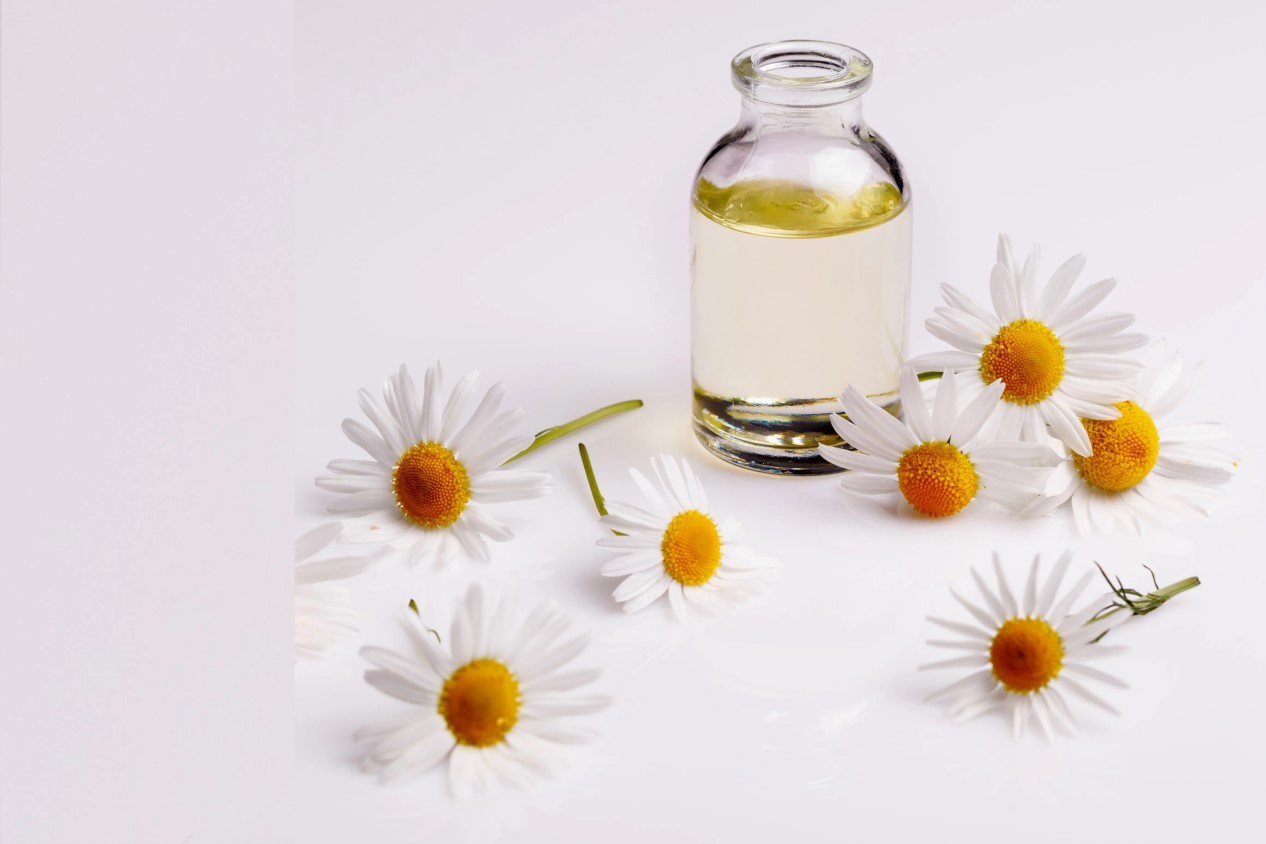
Natural Fragrance: High-purity α-bisabolol carries a very faint sweet floral scent (derived from its parent plants Chamomile or Candeia tree).
Masking Off-odors: It can neutralize the "rancid" or sour smell produced by base oils, surfactants, or fermentation filtrates without adding additional artificial fragrances that might be sensitizing.
pH Adaptability: It is stable within the range of pH 3 to 11. This means that whether it is an acidic exfoliating liquid (pH 3.5) or an alkaline cleansing soap (pH 9.0), its activity will not fail.
Wound Healing Support
Although not as potent as medical drugs, bisabolol has clear data support in accelerating the physical repair of the skin barrier.
It can promote the formation of granulation tissue, which is the early stage of wound healing.
Often used in combination with Panthenol (Vitamin B5).
Combination Data: This "Bisabolol + Panthenol" complex is a standard configuration in many post-medical aesthetic repair creams, used to accelerate epidermal closure after laser treatment or microneedling.